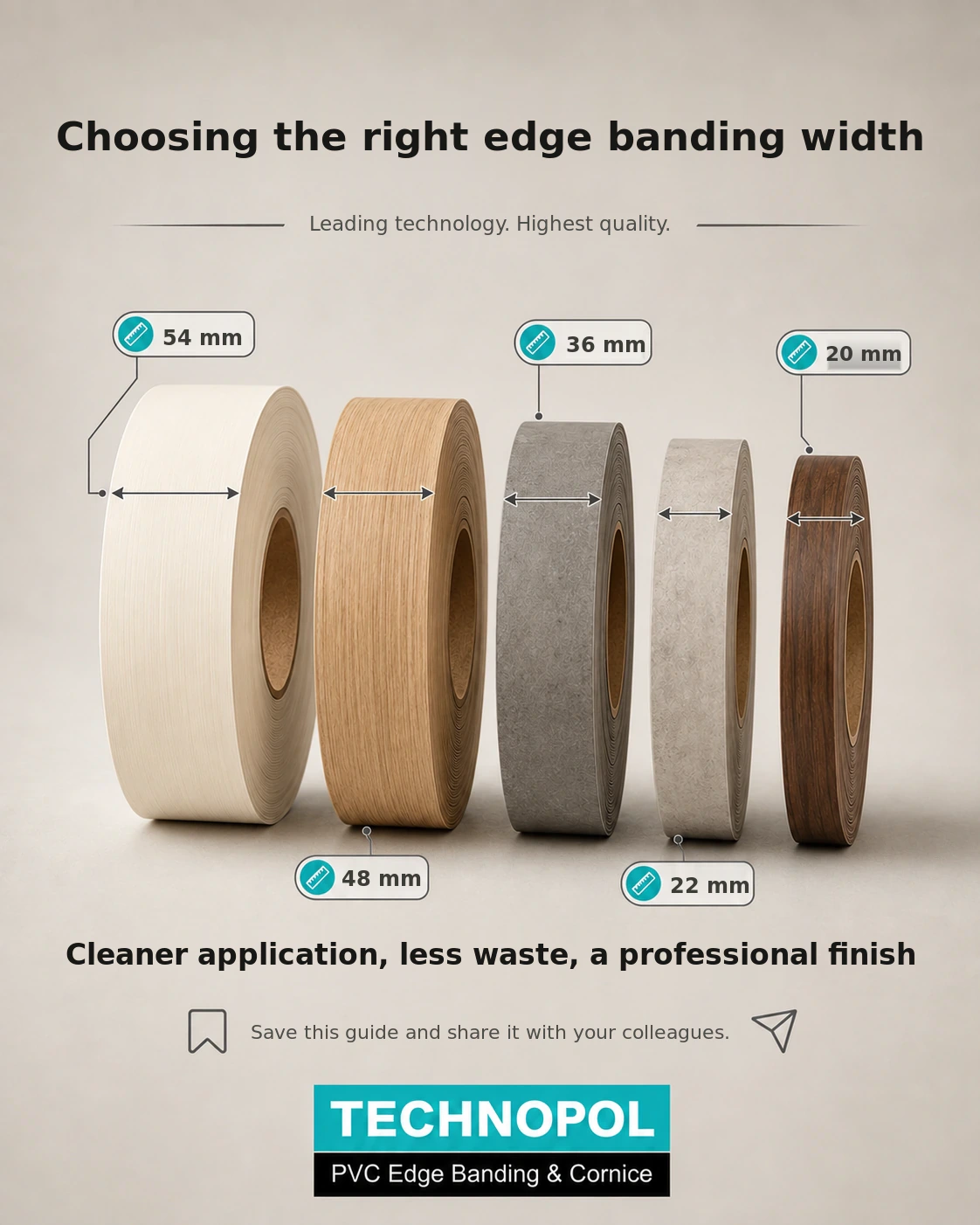

For 16 mm MDF, 20 mm PVC edge banding is a common choice. For 18 mm MDF, 22 mm banding is typically used. The 36, 48 and 54 mm widths suit double-layer components, doors, multilayer panels and wider edges.
Start by measuring the actual thickness of the edge you need to cover. Choose a band slightly wider than the panel thickness to leave room for trimming at the top and bottom. Use the table as a starting point, then confirm the final width against the workpiece and your edge bander settings.
PVC Edge Banding Width Chart for MDF
| Band width | Typical application |
|---|---|
| 20 mm | 16 mm MDF edges for cabinets, wardrobes and shelves |
| 22 mm | 18 mm MDF edges for cabinetry and furniture components |
| 36 mm | Double-layer fronts, columns and thick decorative components |
| 48 mm | Thick doors, tables, counters, thick shelves and multilayer parts |
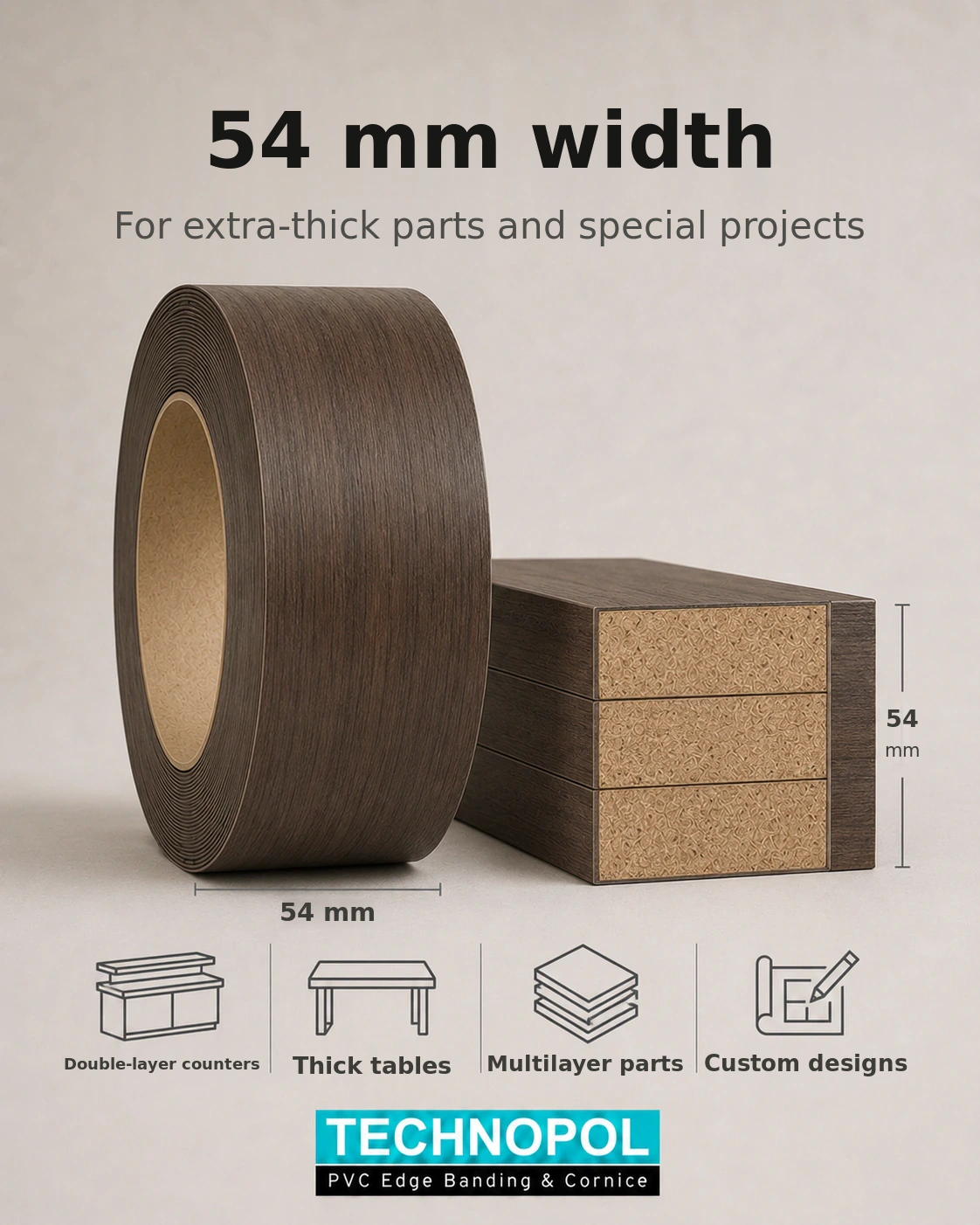
| 54 mm | Wide edges on double-layer counters, thick tables and custom projects |
Which edge banding width should you use?
20 and 22 mm widths for 16 and 18 mm panels
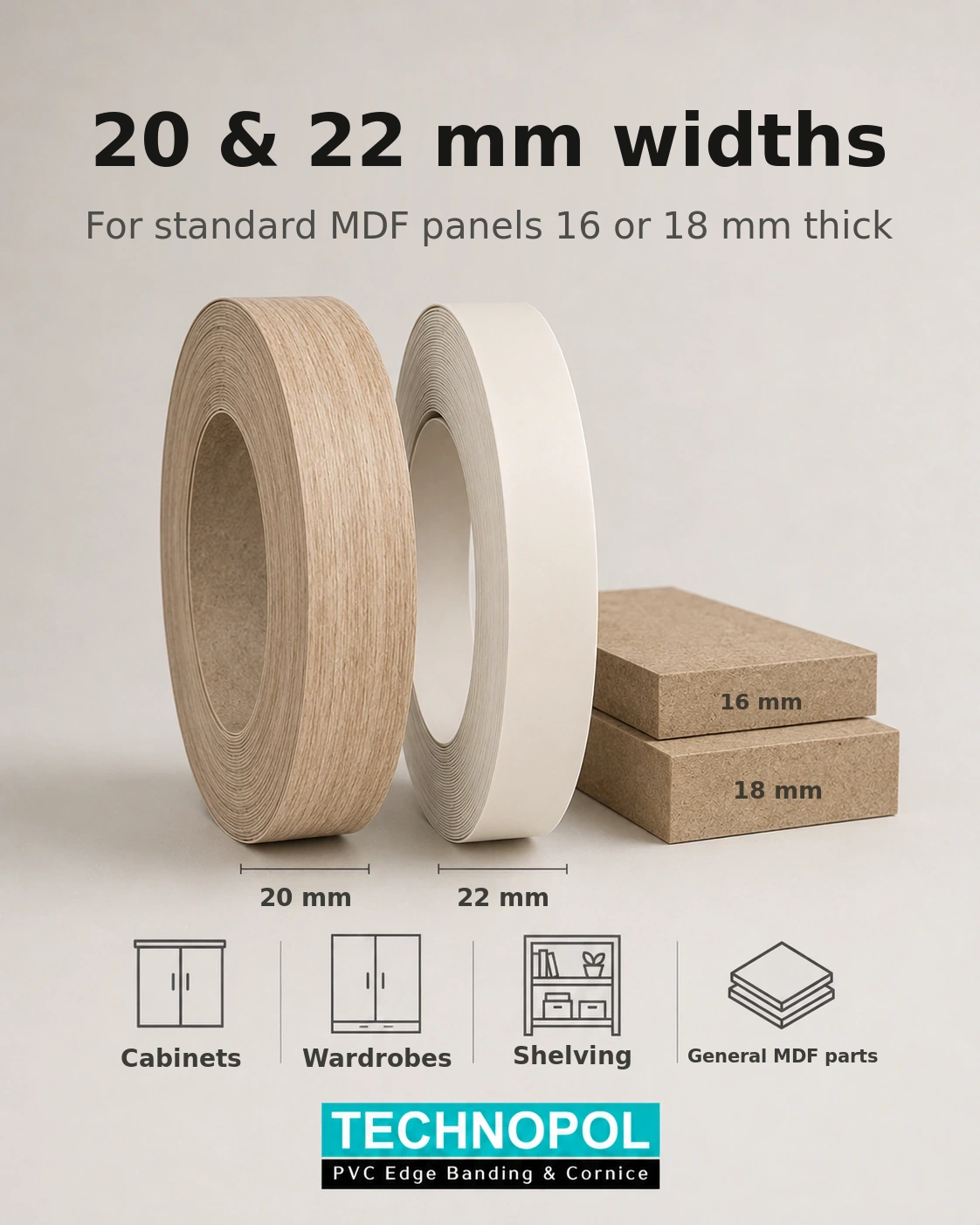
For a part made from a single sheet of MDF, start with the panel thickness. A 20 mm band suits 16 mm MDF, and a 22 mm band suits 18 mm MDF. These two widths are widely used for cabinet carcasses, shelves, wardrobes and other standard MDF parts.
In both pairings, the nominal difference between the band width and panel thickness is 4 mm. When the band is centered on the edge, that leaves about 2 mm on each side for trimming.
36 mm for double-layer MDF and decorative components
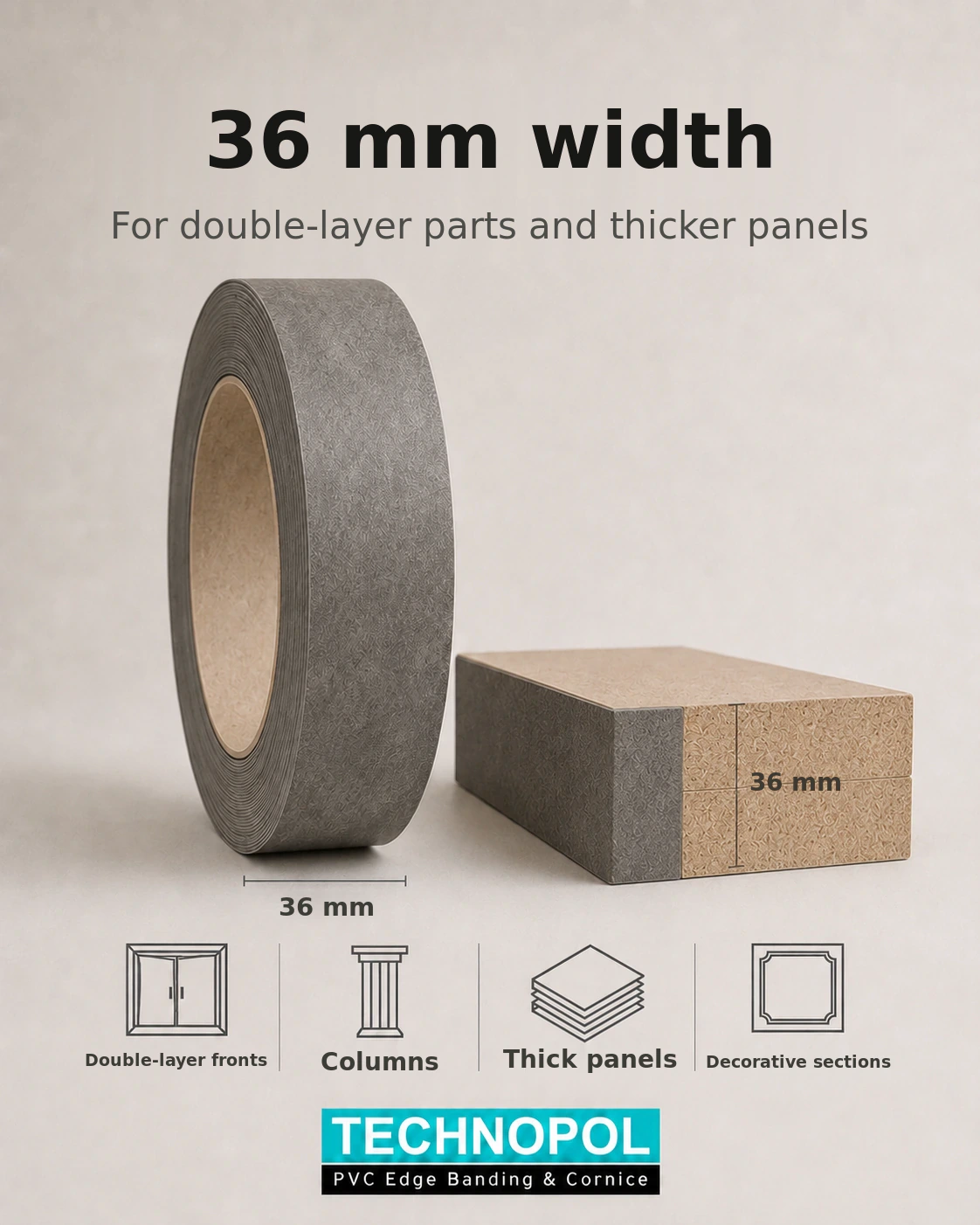
A 36 mm band is used for double-layer fronts, column cladding and thicker panels. Two 16 mm sheets have a combined nominal thickness of 32 mm. In this case, a 36 mm band can work if the actual thickness and your machine’s trimming allowance are suitable.
Measure the edge thickness after assembly. If it measures 36 mm, choose a wider band to leave room for trimming.
48 mm for doors and multilayer panels
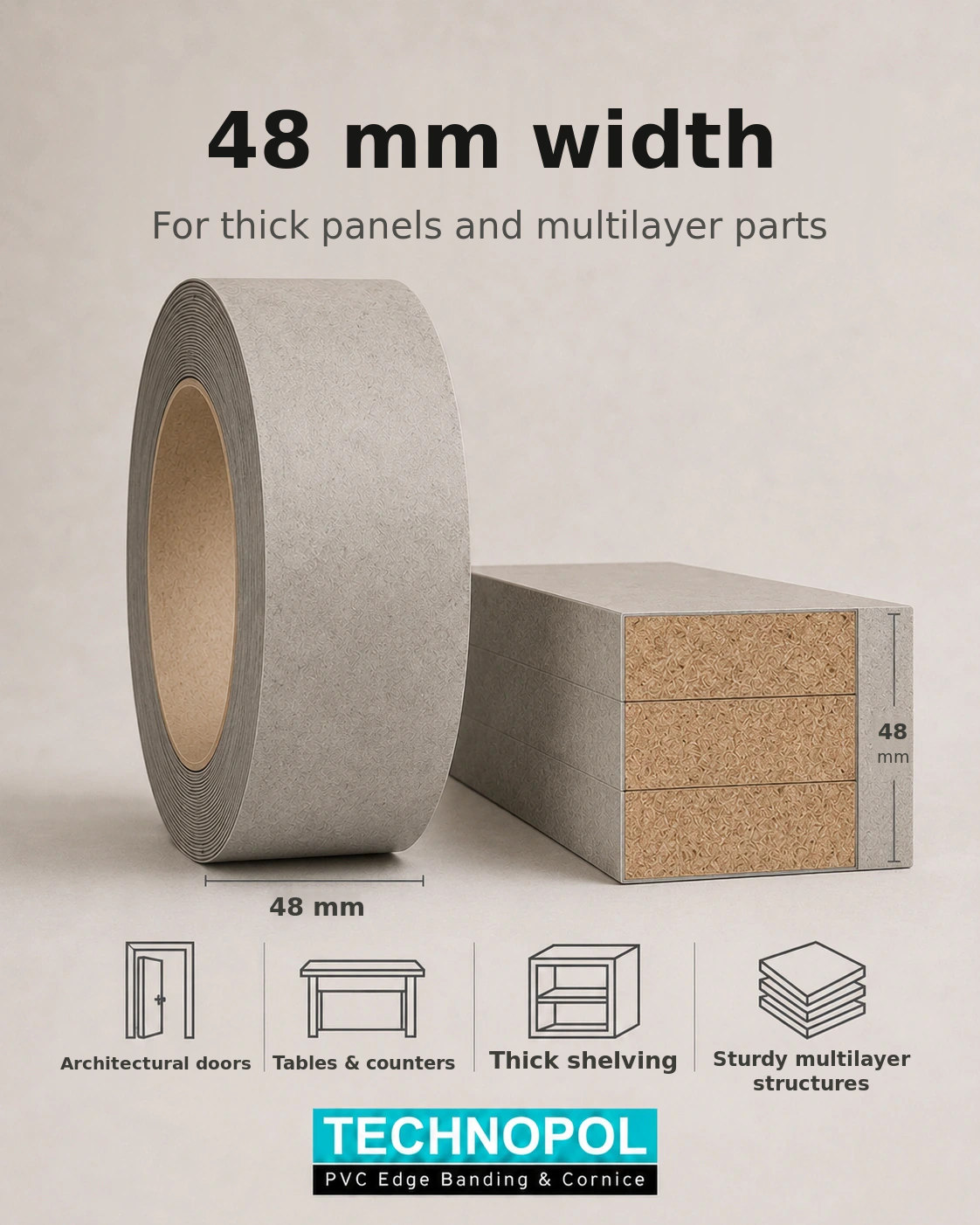
A 48 mm band can cover the edges of thick architectural doors, tables, counters, thick shelves and multilayer components. If a door or panel is assembled from several parts, measure the exact edge where the band will be applied.
Use that measurement to check whether a 48 mm band leaves enough overhang on both sides or whether the part needs a wider band.
54 mm for wide edges and custom builds
A 54 mm band is used on wide double-layer counters, thick tables, multilayer components and custom units with a wider bonding surface. Before ordering, check the maximum band width your edge bander can feed and trim on both sides.
How much room should you leave for trimming?
The band should cover the full edge and leave a small overhang at the top and bottom to trim off. The allowance depends on the actual workpiece thickness and the machine settings.
- Measure the edge thickness at several points.
- Choose a width that gives your machine the required trimming allowance.
- Apply a test strip before running a batch and check that it covers the edge fully and trims cleanly.
Choosing a suitable width can reduce banding waste and rework.

Frequently asked questions about MDF edge banding sizes
For 18 mm MDF, is 20 or 22 mm edge banding better?
A 22 mm band is the common choice. At nominal dimensions, it gives 4 mm of total overhang, compared with 2 mm for a 20 mm band. Use a test piece to confirm the allowance your machine needs.
What is the difference between edge banding width and thickness?
Width determines how much of the panel edge the band can cover. Thickness measures the band itself from the face to the back. For example, 22 × 1 means the band is 22 mm wide and 1 mm thick.
Choosing and ordering TECHNOPOL edge banding
To check availability, send Sepahan Polymer Sales the actual edge thickness, the required band width and thickness, the color code and the length you need.
Browse TECHNOPOL PVC edge banding
Contact Sepahan Polymer Sales
For a consistent finish, see the guide to matching edge banding with MDF.
Once you have chosen the strip width, see how to apply PVC edge banding to MDF for panel preparation, adhesive selection and machine settings.