

Why can edge banding and an MDF panel still look different after application, even when their colors appear very close? The answer does not always lie in the color code. Gloss, texture, pattern, lighting and the quality of edge banding application can all affect how well the edge coordinates with the panel surface.
Edge banding color matching for MDF leads to a more reliable selection when these factors are assessed together. Drawing on the experience of Technopol’s Color Matching and R&D Unit, this article explains what to look for when selecting a coordinated edge banding and evaluating the finished result.
Why similar colors do not always create the same appearance
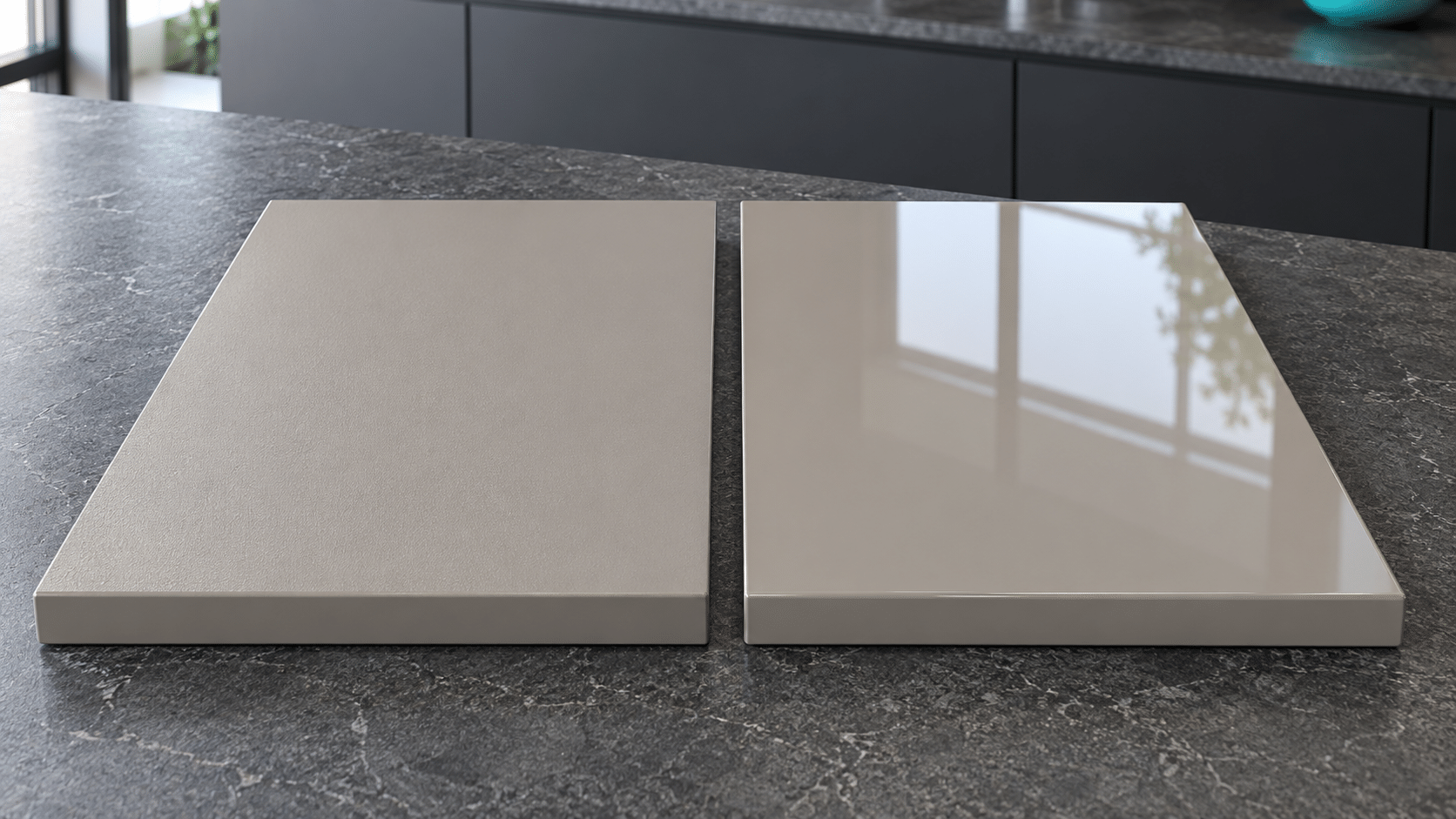
Color is just one aspect of a surface’s appearance. Two samples may be very close in color yet look different side by side because their gloss levels and textures differ.
For example, if an MDF panel has a matte, textured surface while the selected banding is smoother and glossier, the two surfaces will reflect light differently. As a result, the edge may look lighter or darker than the panel from certain angles.
When choosing PVC edge banding, assess the surface finish as well as the color. The level of gloss or mattness and the texture should suit the intended appearance of the finished product.
What should you compare in wood-grain designs?
For wood-grain decors, matching edge banding involves more than comparing a single color. The background, grain, light and dark tones, and texture work together to define the design.
In an oak design, for instance, a close background color match is not enough. Large differences in the darkness, scale or density of the grain can reduce visual coordination. For a more accurate selection, compare:
- The background color and the design’s light and dark tones
- The color, scale, density and direction of the grain
- The surface texture and gloss level
- How the banding looks alongside the panel after application
The aim is visual coordination between the edge and the main surface. Exact repetition of every grain feature on the panel is not, by itself, an appropriate criterion for assessing the match.
How do lighting and viewing angle affect color matching?
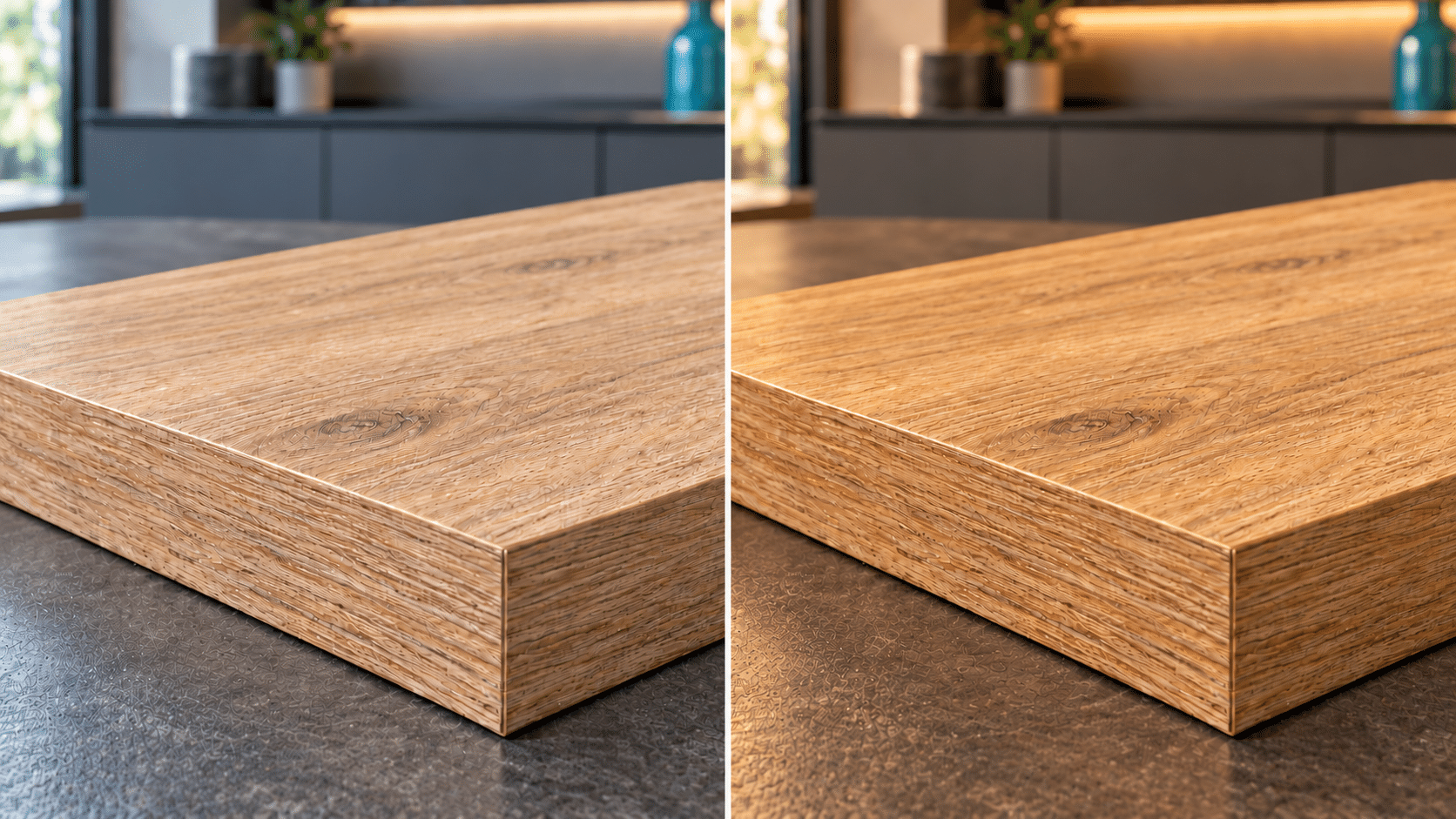
The match between the banding and the panel should be assessed under suitable lighting. Two samples may look similar under one light source but show a greater difference under another. In color science, this phenomenon is known as metamerism.
The direction of the light and the viewing angle also affect surface appearance, especially on glossy or textured finishes. In the finished product, the panel face and its edge usually lie in different planes, so they receive and reflect light from different directions.
First compare samples under consistent, repeatable lighting, then assess the finished test piece under the lighting where it will be used. A match in one photograph or under a single lamp is not enough to judge the final result.
Why a photograph cannot replace a physical panel sample
A photograph is useful for an initial assessment of the general color and design, but it is not a definitive matching reference. Lighting, camera settings, image processing and the display can all alter the appearance of a color. Texture and gloss are not always represented accurately either.
A physical sample allows direct assessment of color, pattern, texture and light reflection. For projects where visual coordination is critical, the final choice should be based on a sample of the actual panel to be used. The Technopol product catalog can also help with an initial overview of the product range and available options.
How do banding thickness and application quality affect the edge?
The thickness of the banding affects the finished edge profile and the radius or rounding that can be formed at the corners. It should suit the product’s application, the edge design and the machine’s capabilities. Thicker banding does not automatically mean a better color match.
Banding width is a separate consideration. Choose it to suit the panel thickness and the allowance required for trimming and finishing.
After edge banding, the quality of milling, scraping and finishing can change the appearance of the machined areas. When investigating a mismatch, establish whether it appears on the main banding surface or only in the finished areas and along the joint.
Localized whitening, tool marks or residual adhesive should not be attributed to an initial color mismatch without investigation. These issues require a review of the materials, tooling and application conditions.
Make a fully finished sample before volume production
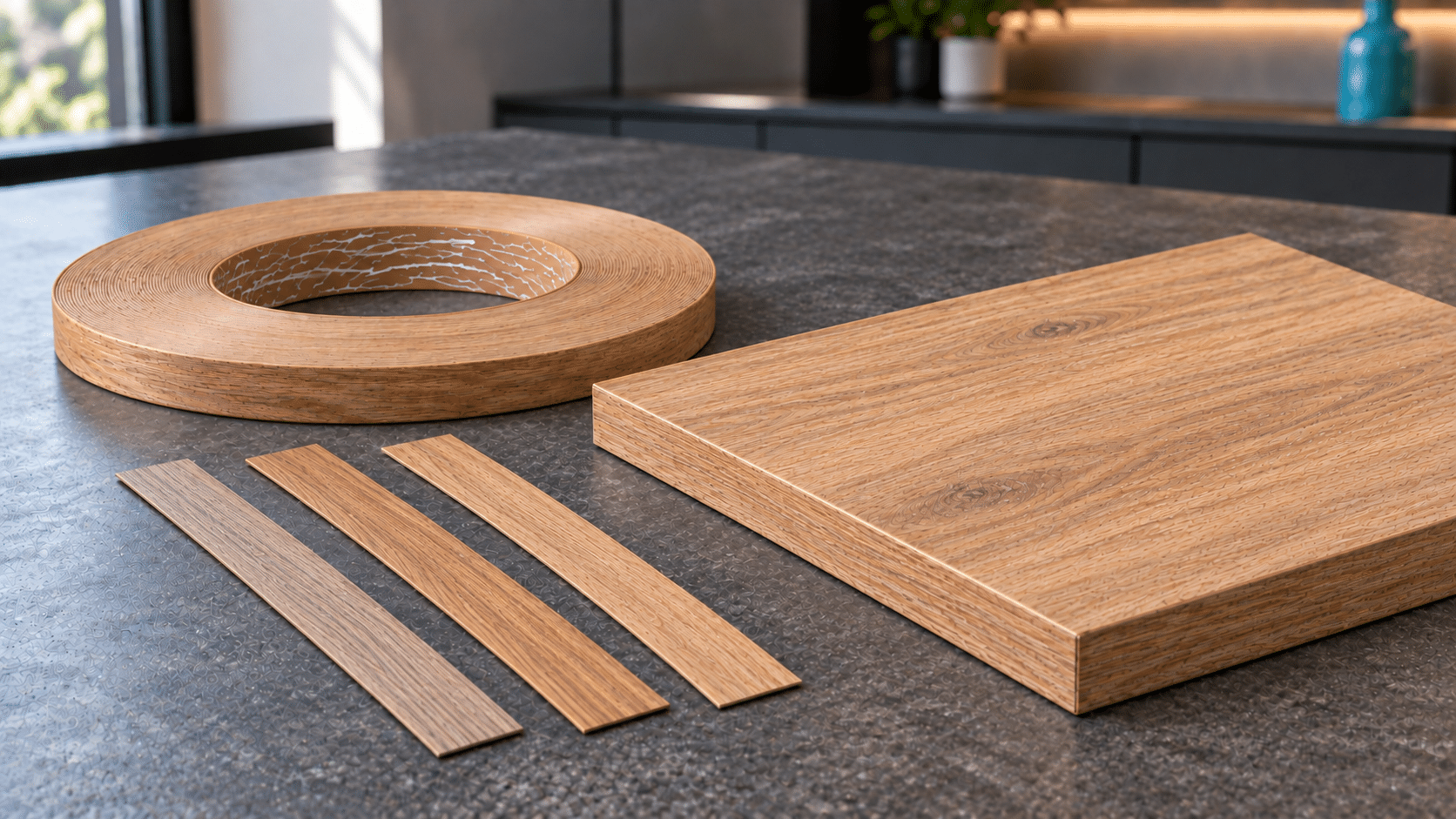
One of the most effective ways to evaluate a selection is to apply the banding to a sample of the same panel that will be used in the project. Use the adhesive, machine and settings intended for production, and include every finishing step.
Once the sample is ready, check:
- Coordination of color, pattern, texture and gloss between the banding and the panel
- The edge’s appearance under different lighting and viewing angles
- Joint quality and the visibility of the glue line
- Consistency of the milled and finished areas
- Whether the edge profile suits the product design
This assessment is especially important for cabinets, furniture, wardrobes and projects with many adjacent components. Approving a finished sample before volume production can reduce the risk of an unsuitable selection and subsequent rework.
Keep approved samples for orders delivered in stages
For large projects, visual consistency should be checked throughout procurement and production. Estimating the required quantity of banding at the start and planning its supply makes later orders easier to manage.
Keep the approved banding and panel samples, together with their specifications, as references for subsequent deliveries. Make comparisons under the same lighting conditions wherever possible.
If you notice a visible difference, discuss it with the supplier before using the material extensively. An identical product code does not replace inspection of the actual sample.
What information helps you choose the right edge banding?
The more complete the panel and project information, the more accurately suitable options can be assessed. Have the following details ready when seeking advice and choosing banding:
- The panel manufacturer, color code and design name
- A physical sample of the panel, if available
- The surface texture and level of gloss or mattness
- The panel thickness and required banding width and thickness
- The application and intended edge profile
- Approximate material requirements and the project’s supply schedule
Photographs and color codes can help start the assessment. For demanding applications, however, comparing physical samples and carrying out an application trial are more important.
Specialist assessment by Technopol’s Color Matching Unit
At Technopol’s Color Matching and R&D Unit, color and gloss are evaluated through both instrumental measurement and visual assessment. These methods complement each other: instruments help compare measurable properties more precisely, while visual assessment considers how the samples coordinate in appearance, taking texture, pattern and viewing conditions into account.
The final selection should reflect the project’s requirements and the results of the finished test piece. The appearance of the final product depends on the combined characteristics of the banding and panel, together with the quality of application.
Conclusion
Matching edge banding to MDF goes beyond choosing a similar color code. Gloss, texture, pattern, lighting, edge profile and finishing quality all play a role. Reviewing physical samples, making a finished test piece and retaining approved samples support more accurate selection and better control of visual consistency.
For guidance and to arrange delivery of a panel sample to the factory’s Color Matching Unit, contact the Technopol team.
The images in this article were generated with AI to illustrate the concepts discussed. They are not color approval references or representations of actual test results.
Author: Technopol Color Matching and R&D Unit